

The Nasdaq-100 fell 6.6% in July. The strategy was close to flat, at −0.3%. That is a 6.3pp month of relative performance produced almost entirely by what the book was not holding.
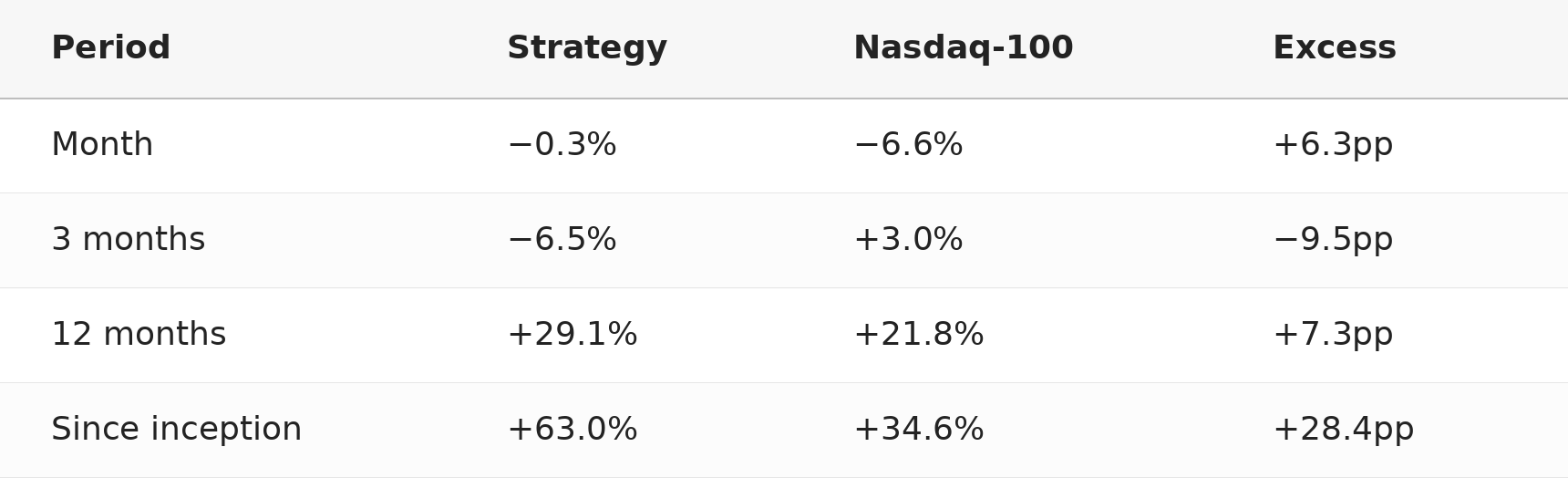
The three-month line is the honest one, and it is negative. June cost the book 14.4% against a flat benchmark. July did not repair that; it stopped it getting worse.
Absolute contribution to the month’s:
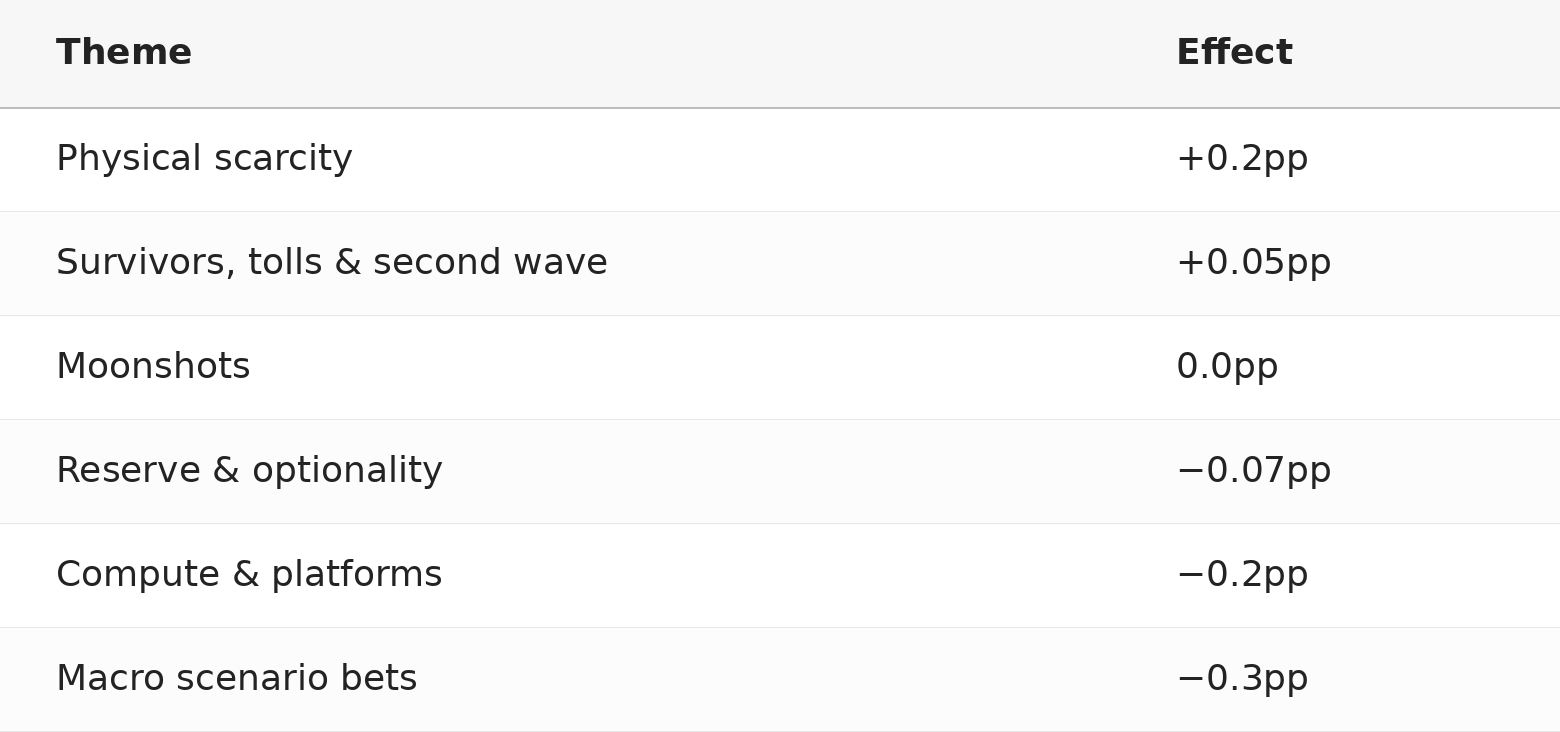
Read that table next to the benchmark and the arithmetic tells the story. Nothing in the book made much money in July. Reserve and optionality shows as a small negative in absolute terms and was the largest positive contributor in relative terms, because 28% of the book sat in cash and an index put overlay while AI hardware sold off. That is the whole function of holding it. The macro sleeve did the same job in a different way: the debasement position absorbed drawdown that a semiconductor position would have handed straight through.
The single decision of the month: we began buying bottleneck infrastructure into the weakness rather than waiting for a cleaner entry.
Where we are
Still in the buildout phase, and still positioned for it the same way. Own the physical bottleneck of the AI buildout now. Hold dry powder for the expensive, fast-depreciating layer rather than paying today’s prices for it.
July pushed the two halves of that picture apart, which is why it is worth writing down.
The businesses got better. Google Cloud grew 82%. Microsoft’s Azure passed $100 billion in annual revenue and accelerated to 43% growth, on commercial obligations of $678 billion. AWS posted its fastest growth in eighteen quarters. None of Microsoft, Alphabet, Amazon or Meta cut their spending plans; three of the four raised them. AI revenue is finally catching up with AI spending, for the second quarter running.
The money got worse. On 9 July, S&P cut Oracle to BBB−, one notch above junk, after a fiscal year in which the company burned $23.7 billion of free cash flow building AI capacity. Alphabet turned free-cash-flow negative for the first time and its long-term debt rose 111% to $98 billion over the first half; Amazon’s rose 81% to $119 billion in a single quarter. The buildout is increasingly borrowed, and it is borrowing at a rising price.
That combination is the phase in miniature. Demand for the thing being built is strengthening. The cost of financing it is deteriorating. If this market breaks from here, it breaks with the underlying trend intact, and that is precisely the break the reserve exists to buy.
Composition
Percent of the book, 31 July 2026.
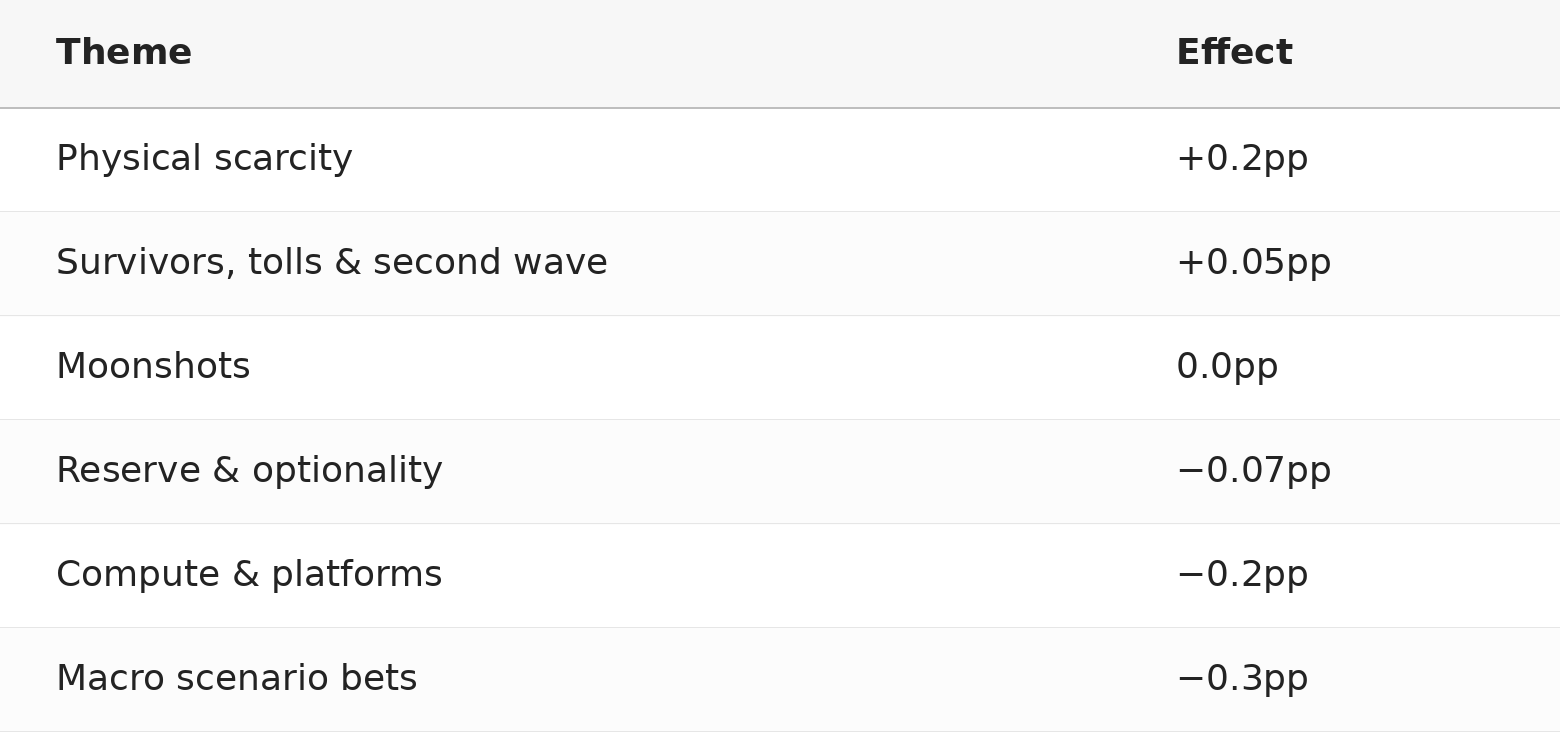
Named holdings, mandated ranges and the full attribution sit on the book page, updated on the same close.
The honest weak link
Two lines in that table are outside where they should be.
Physical scarcity sits under its mandated band. It is the route the thesis leads with, and the book is underweight it — that is a gap between what I argue and what I own, and it is the one I am actively closing.
Moonshots sits at zero against a band that expects a position. Not by design: the names passing the screen have not reached prices I will pay. An empty sleeve is a defensible answer to expensive prices, but it stops being defensible if it is still empty three closes from now. Consider that noted in public.
The next full review, with the scenario set and what moved in it, publishes at the quarter.
The framework these positions come from: the research. The founding essay: Who Gets Rich When Intelligence Is Free? The same read, applied to the decision on your desk: advisory.
Concentrated, high-volatility strategy; capital may be lost. Past performance does not guarantee future results. Nothing here is investment advice or an offer.